

Medical Skin Care Treatments
Medical skin care is a treatment category performed under dermatological supervision and goes beyond at-home cosmetic products. It includes evidence-based methods such as chemical peels, mesotherapy, PDRN/hyaluronic acid-based skin booster injections and professional exfoliation. Each method targets a different skin layer and mechanism; the right choice depends on skin type, the targeted concern such as dullness, fine lines, pores or loss of hydration, and the acceptable recovery time.
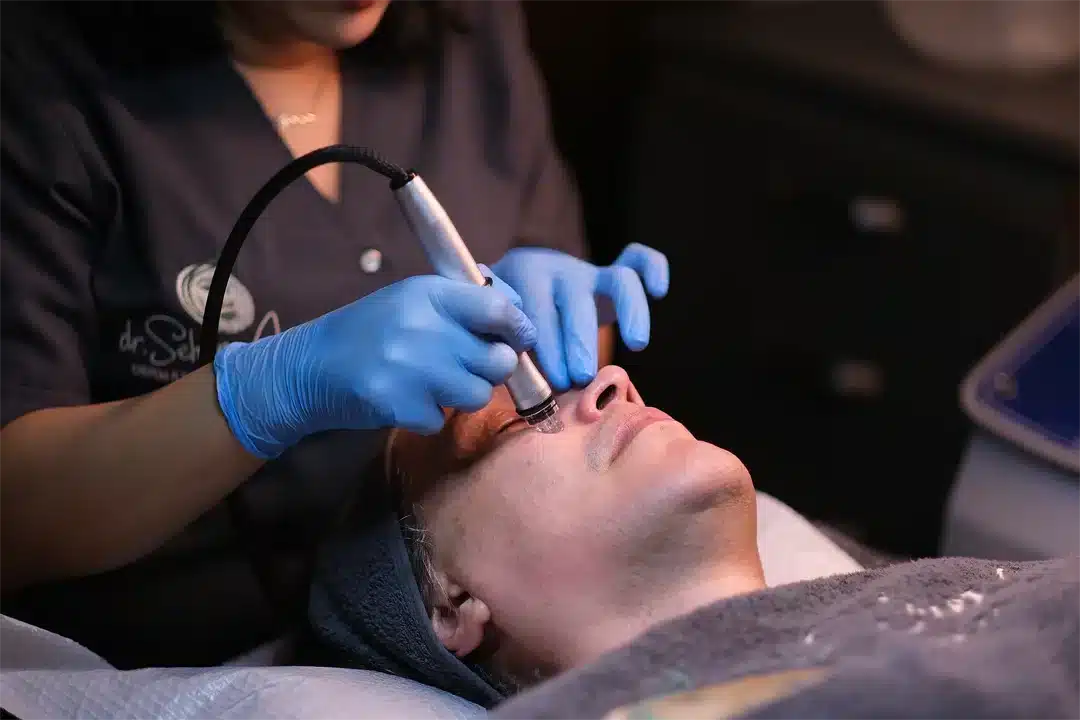
“Skin care” is more than daily moisturizers and cleansers; in dermatology clinics, it is a professional treatment category that can affect the structure of the skin at a cellular level. These methods, offered in a wide range from chemical peels and mesotherapy to PDRN-based skin booster injections and professional exfoliation procedures, aim to improve the skin’s moisture-retention capacity, radiance, elasticity and texture. In this article, we discuss the main medical skin care categories offered in the clinic, their mechanisms and scientific evidence.
Main Categories of Medical Skin Care
1. Chemical Peeling
Chemical peeling aims to remove dead skin cells and reveal the fresher skin layer underneath by creating controlled exfoliation with acid-based solutions applied to the skin. According to the depth of effect, it is divided into four main categories:
- Very superficial peeling: Acts only at the level of the stratum corneum, the outermost horny layer; for example, low-concentration glycolic acid.
- Superficial peeling: Acts down to the basal layer of the epidermis and is preferred for improving skin texture.
- Medium-depth peeling: Affects the epidermis and the papillary layer of the dermis; it is used for sun spots, fine wrinkles and acne scars, for example 35-50% TCA or 70% glycolic acid.
- Deep peeling: Reaches the reticular dermis and can provide visible results, but requires a longer recovery period; today, it is preferred less frequently.
Studies show that superficial peels increase epidermal and dermal hyaluronic acid production, while medium and deep peels provide more pronounced and longer-term improvement in collagen amount and dermal thickness.
2. Mesotherapy
Mesotherapy is the application of skin-nourishing substances such as hyaluronic acid, vitamins, minerals and amino acids into the middle layer of the skin, the mesoderm, through micro-injections. In a randomized controlled study, non-cross-linked hyaluronic acid-based mesotherapy was shown to significantly and sustainably improve skin elasticity and complexion radiance during a 3-month follow-up. It may be preferred for patients aiming to improve skin hydration balance, firmness and overall vitality.
3. Skin Booster / Radiance Treatments (PDRN, Hyaluronic Acid)
Skin booster injections, which have become popular in recent years, usually contain pure hyaluronic acid or PDRN (polydeoxyribonucleotide) derived from salmon/trout DNA. PDRN activates adenosine A2a receptors, supports angiogenesis (new blood vessel formation) and cell proliferation, reduces inflammation and provides nucleotide fragments that fibroblasts can use for DNA repair. A systematic review combining 9 clinical studies involving 219 patients reported that PDRN/polynucleotide treatments provided a statistically significant reduction in wrinkles, visible tissue improvement within 3 months and measurable increases in elasticity; side effects were reported as mild and temporary, such as swelling and redness at the injection site.
4. Professional Exfoliation (Microdermabrasion and Similar Methods)
These methods mechanically smooth the skin surface and aim to remove dead cells while supporting cell renewal. They are usually combined with other care steps such as serums and hydration to provide immediate radiance and smoothness; they are low-risk options that do not require downtime.

Which Skin Care Treatment Is Suitable for Which Purpose?
Method | Main Target | Recovery Time |
Superficial chemical peel | Skin texture, mild dullness | None to short |
Medium-depth peel | Pigmentation, fine wrinkles, acne scars | A few days |
Mesotherapy | Hydration, elasticity, complexion radiance | None to short (mild redness) |
Skin booster (PDRN/HA) | Tissue quality, wrinkles, elasticity | None to short |
Professional exfoliation | Immediate radiance, smoothness | None |
In many patients, combining these methods, such as mesotherapy + superficial peeling, provides a more comprehensive result than using a single method alone. The right protocol is planned according to the skin type and treatment goal determined during the examination.
Safety and Points to Consider
- Chemical peels and injection-based treatments should be performed by a physician or by a trained practitioner under physician supervision.
- Sun protection should be carefully maintained before and after peeling and skin booster procedures; UV exposure may increase post-procedure sensitivity and may also lead to unwanted pigmentation.
- In cases such as active skin infection, pregnancy or bleeding disorders, some procedures, especially injection-based treatments, require physician evaluation.
- In injection-based treatments such as mesotherapy and skin boosters, sterile technique and appropriate product selection are key factors for safety.
Skin Care Treatments Offered at Our Clinic
At Dr. Seher Arı Aesthetic Dermatology Clinic, various personalized medical skin care options are offered according to your skin type and goals:
- Peeling Treatments — for skin texture, pigmentation and dullness,
- Mesotherapy — for hydration, elasticity and overall skin vitality,
- DNA Glow and Paris Glow — skin booster/PDRN and nourishing combined injection protocols,
- Satin Skin Treatment — for professional exfoliation and immediate radiance,
- Skin Rejuvenation protocols — combination of multiple methods.
- Skin Care
Frequently Asked Questions About Skin Care
What is the difference between medical skin care and at-home skin care?
Medical skin care is performed under dermatological supervision and may include higher concentrations of active ingredients or injection/device-based methods, which can affect deeper layers of the skin. At-home care products are generally lower in concentration and have a more superficial effect.
Which care method is suitable for me?
This depends on your skin type, the result you want to achieve such as hydration, radiance, pigmentation or wrinkles, and the recovery time you can accept. The final recommendation is made by the physician after an examination.
Are skin booster (DNA Glow) injections safe?
Published clinical studies have reported that the side effects of PDRN/polynucleotide-based skin booster treatments are generally mild and temporary, such as swelling and redness at the injection site. When performed with sterile technique by a trained practitioner, it is considered safe.
Does the skin peel after a chemical peel?
This depends on the depth of the peel. Very superficial and superficial peels may not cause visible peeling; medium-depth peels may cause mild peeling that lasts for a few days.
How long does it take to see results?
With superficial methods such as exfoliation and light peeling, the effect is usually seen immediately. Injection-based treatments such as mesotherapy and skin boosters may require several sessions and a few weeks for a cumulative effect.
Can skin care treatments be combined?
Yes. In clinical practice, combining different methods, such as mesotherapy + superficial peeling, is common and usually provides a more holistic result than using a single method alone. The combination plan is determined by the physician.
Skin Care Evaluation at Dr. Seher Arı Clinic
It is not possible to recommend the most suitable skin care protocol without evaluating your skin type, current concerns and expectations. At Dermatology Specialist Dr. Seher Arı Aesthetic Dermatology Clinic in Göktürk, Istanbul, a personalized care plan is created after the examination. You can contact the clinic for appointments and information.
Legal Notice: This content is for informational purposes only, does not replace healthcare services and cannot be used for diagnosis or treatment. For personalized evaluation, please consult a dermatology specialist.
References
- “Superficial & Medium Depth Chemical Peels.” Next Steps in Dermatology. https://nextstepsinderm.com/derm-topics/superficial-medium-depth-chemical-peels/
- “Chemical Peels: Classification, Indications, & Complications.” The Plastics Fella. https://www.theplasticsfella.com/chemical-peels/
- “Clinical and biometrological efficacy of a hyaluronic acid-based mesotherapy product: a randomised controlled study.” PMC. https://pmc.ncbi.nlm.nih.gov/articles/PMC3778226/
- Lampridou et al. “The Effectiveness of Polynucleotides in Esthetic Medicine: A Systematic Review.” Journal of Cosmetic Dermatology, 2025. https://onlinelibrary.wiley.com/doi/10.1111/jocd.16721
- “Polydeoxyribonucleotide: A promising skin anti-aging agent.” ScienceDirect. https://www.sciencedirect.com/science/article/pii/S2096691122000723