
Skin Rejuvenation with BBL (BroadBand Light) Treatment
BBL (BroadBand Light) is a phototherapy technology based on the principle of selective photothermolysis. Compared to conventional IPL (intense pulsed light), it is developed with a broader light spectrum and adjustable wavelength, pulse duration and cooling features. It is used for sun spots, skin redness, rosacea, enlarged vessels and general signs of photoaging. It is generally comfortable, does not require downtime and is commonly performed as a 3-session protocol at 3-4 week intervals, followed by a maintenance session every 6-8 months.
Sun-related pigmentation, skin redness and enlarged vessels are among the most common skin concerns that develop over the years. BBL (BroadBand Light) is positioned as an advanced version of IPL (intense pulsed light) technology, targeting these superficial pigment and vascular concerns with a non-surgical light-based treatment.
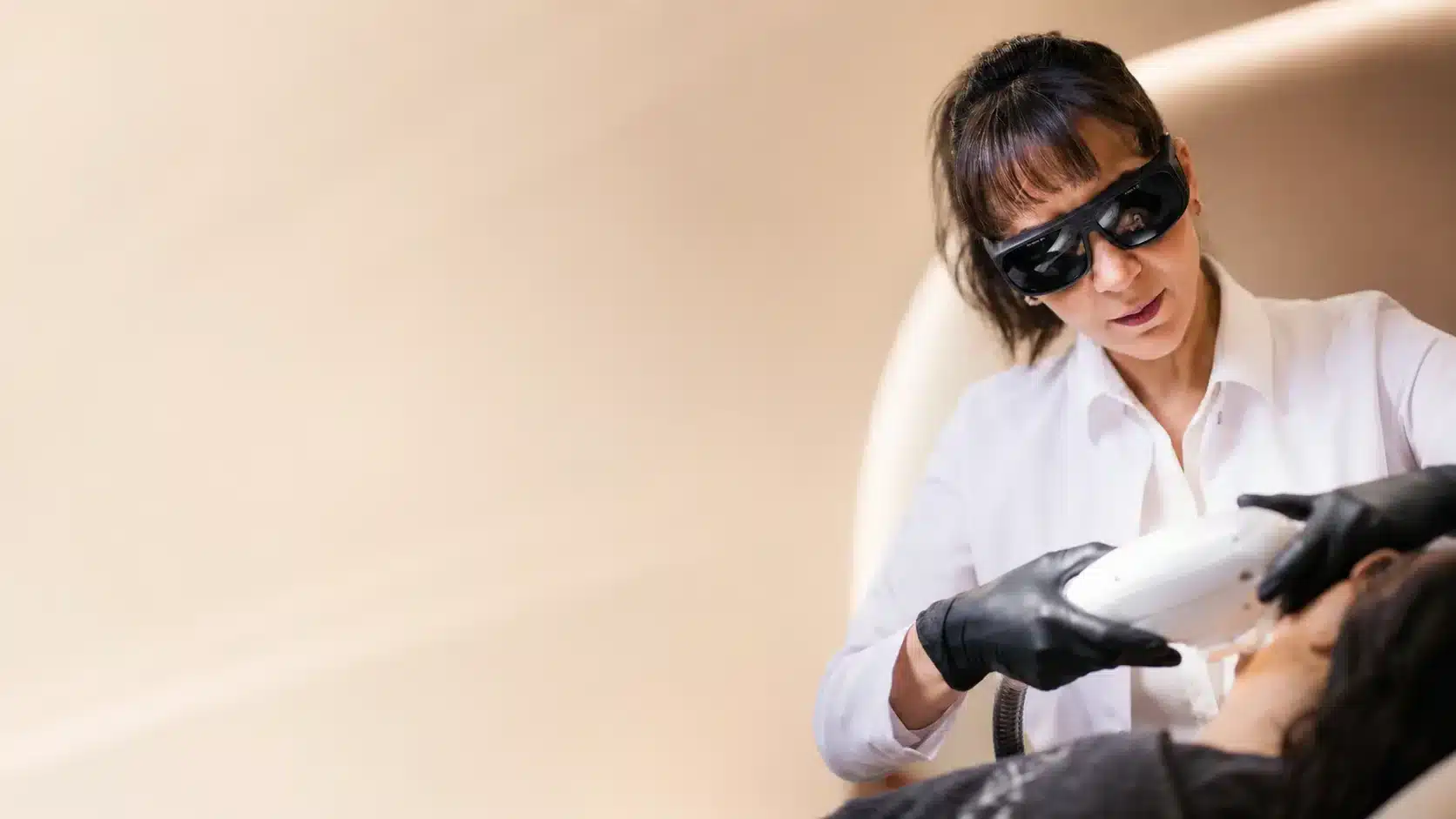
What Is BBL?
BBL stands for “BroadBand Light” and refers to a light-based treatment technology used in dermatology for photorejuvenation. A terminology note is important here: the abbreviation “BBL” is sometimes used in aesthetics to mean “Brazilian Butt Lift”, a buttock augmentation surgery. This is a completely different surgical procedure and is not the subject of this article.
How Does BBL Work? (Mechanism)
BBL works on the principle of “selective photothermolysis”, as do many other dermatological light and laser systems: the emitted light energy is absorbed by the targeted chromophore (melanin or hemoglobin) without damaging the surrounding tissue. What differentiates it from conventional IPL systems is that it covers a broader visible light spectrum and allows wavelength, pulse width and cooling parameters to be adjusted more precisely according to skin type and the targeted concern. As a result:
- Superficial pigmented lesions (sun spots, superficial brown spots) are targeted, become darker and gradually shed over time,
- Enlarged capillaries and redness are reduced by the absorption of light by hemoglobin,
- Dermal collagen production is stimulated through controlled heat, helping the skin texture improve gradually.

Differences Between BBL and Conventional IPL
Feature | Conventional IPL | BBL |
Light spectrum | Relatively narrow | Broader spectrum |
Parameter adjustment | Limited | Wavelength, pulse duration and cooling can be customized separately |
Adaptability to skin type | Moderate | Higher |
Treatment comfort | Variable | Relatively more comfortable with a sensitive cooling system |
Both technologies are based on the same fundamental principle (selective photothermolysis); BBL offers this principle with a more flexible and personalized set of parameters.
In Which Conditions Is It Used?
- Sun-related superficial pigmentation and general uneven skin tone,
- Skin redness, rosacea and enlarged capillaries,
- Signs of photoaging (fine lines, texture irregularities),
- Some mild acne and post-acne redness concerns.
Scientific Evidence
In a study supported by the company that developed BBL technology and conducted with Stanford University, regular BBL treatment was reported to show a “rejuvenation” effect in skin cells at the level of gene expression, with mRNA profiles changing in a way similar to younger-looking skin. In a separate retrospective evaluation, patients who received regular BBL sessions (annually or twice yearly) for 5 to 11 years were observed to have less visible and later-developing signs of photoaging, such as sun damage, enlarged vessels and skin laxity. These findings suggest that BBL may be considered not only as a one-time cosmetic procedure, but also as a maintenance protocol that supports skin health in the long term when performed regularly.
How Does the Treatment Process Work?
Parameter | Details |
Procedure duration | Approximately 15–20 minutes, depending on the treatment area |
Initial protocol | Usually 3 sessions, at 3–4 week intervals |
Maintenance session | One session every 6–8 months |
Pain / need for anesthesia | Generally painless; anesthesia is usually not required |
Recovery time (downtime) | None; temporary darkening of targeted spots or redness may occur |
When results become visible | Gradually as sessions progress |
For more visible skin concerns (intense pigmentation or redness), a 3-5 session protocol may be recommended. The exact number of sessions is determined after examination according to skin type and the intensity of the concern.
Who Is It Not Suitable For?
- During pregnancy or when pregnancy is suspected,
- On skin that has been exposed to sun or tanned within the last 4 weeks,
- In individuals with active sunburn, open wounds or infection in the treatment area,
- On areas with active skin disease or certain dermatological conditions (physician evaluation is required).
BBL can be applied to many skin types thanks to different wavelength options; however, final suitability is determined by the physician after evaluating skin type and medical history.
Things to Consider After BBL
- A high-factor sunscreen should be used regularly; this is critically important for maintaining the results,
- During the first 24 hours, washing the face with very hot water, heavy exercise and environments such as saunas should be avoided,
- Regular moisturizer use is recommended to support the skin barrier,
- It is recommended to avoid makeup for 24 hours after the procedure,
- Temporary darkening or redness in the targeted spots or vessels is normal and resolves on its own.
Frequently Asked Questions About BBL Treatment
Is BBL a painful procedure?
No, it is generally not painful. During the procedure, a mild warming or heat sensation may be felt; the sensitive cooling system helps provide high treatment comfort.
How many sessions are needed to see results?
In the standard protocol, 3 sessions performed at 3-4 week intervals are recommended; for more intense concerns, 3-5 sessions may be required. Results become gradually more visible as the sessions progress.
Are BBL and conventional IPL the same?
They are based on the same fundamental principle (selective photothermolysis), but BBL offers a broader light spectrum and more flexible parameter settings (wavelength, pulse duration, cooling), making BBL an advanced version of IPL.
Are the results permanent?
The improvement achieved after the initial protocol can be maintained for a long time with regular maintenance sessions (every 6-8 months) and sun protection. Regular treatment has been reported to help delay signs of photoaging over the years.
Is it effective in rosacea treatment?
Yes. By targeting enlarged vessels and redness, BBL is one of the light-based methods frequently preferred to reduce signs of rosacea.
Why is sun protection so important after the procedure?
Because BBL energy is largely absorbed by melanin, additional sun-related pigmentation may both reduce the quality of the results and create a risk of unwanted pigmentation. Therefore, regular sunscreen use is essential.
Can it be applied to every skin type?
BBL can be used across a wide range of skin types thanks to adjustable wavelength options; however, parameters need to be selected more carefully for darker skin tones. Final suitability is determined after examination.
BBL Assessment at Dr. Seher Arı Clinic
It is not possible to determine whether BBL is suitable for you without evaluating your skin type, the intensity of your pigmentation/redness and your expectations. At Dr. Seher Arı Aesthetic Dermatology Clinic in Göktürk, Istanbul, a personalized treatment plan is created after examination. You can contact the clinic for appointments and information.
Legal Notice: This content is for informational purposes only, does not replace healthcare services and cannot be used for diagnosis or treatment. Please consult a dermatology specialist for a personalized evaluation.
References
- “BroadBand Light Therapy: The Science Behind BBL.” Sciton. https://sciton.com/broadband-light-therapy/
- “Sciton’s BroadBand Light (BBL) Technology Is Revolutionizing The Future Of IPL.” Sciton. https://sciton.com/blog-scitons-broadband-light-bbl-technology-is-revolutionizing-the-future-of-ipl/
- “BBL HEROic by Sciton.” Sciton (product and clinical application information). https://sciton.com/bbl-heroic/