

Expert Dermatological Approach for Acne-Prone Skin
Acne is a common skin concern that can occur not only during adolescence but also in adulthood. It may appear with symptoms such as pimples, blackheads, whiteheads, increased oiliness, clogged pores and occasional sensitivity.
In addition to affecting the appearance of the skin, acne may also have a negative impact on a person’s self-confidence, social life and psychological comfort. For this reason, acne treatment should not be considered only as a process aimed at reducing existing pimples; it should be evaluated as a holistic process that supports the overall balance of the skin and aims to help control the tendency to recur.
At Uzm. Dr. Seher Arı Dermatology Clinic in Göktürk, Istanbul, acne treatment is planned individually by taking into account the person’s skin type, acne severity, distribution of lesions, skin sensitivity and daily skin care habits.
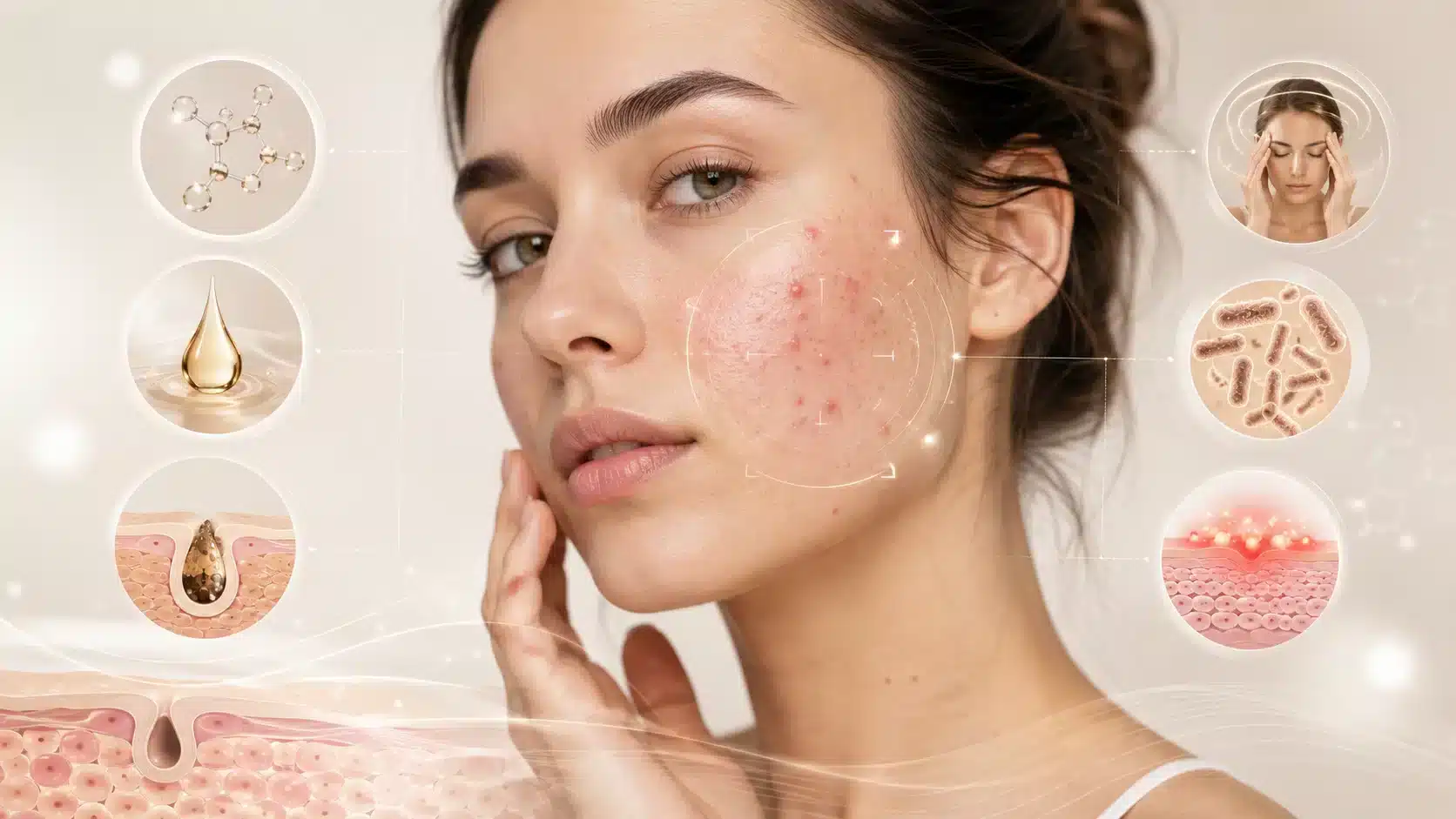
Why Does Acne Occur?
There is no single cause of acne. In general, many factors may play a role together, including hormonal changes, stress, genetic predisposition, overactive sebaceous glands and clogged pores.
During periods of stress, the secretion of hormones such as cortisol may increase in the body. The accompanying hormonal changes may cause the sebaceous glands to become more active in some people. When excess sebum production combines with dead skin cells and clogged pores, acne formation may become more noticeable.
In acne-prone skin, the type of acne and the current condition of the skin should first be evaluated by a specialist physician in order to create the right treatment plan.
What Is Acne Treatment?
Acne treatment is a dermatological treatment process planned to reduce active acne lesions, control the formation of new pimples, cleanse clogged pores and support the oil balance of the skin.
The treatment process may be planned differently depending on whether acne is mild, moderate or more intense. In some skin types, medical skin care and regular home care may be sufficient, while in other cases dermatological treatments, clinical procedures and more regular follow-up may be required.
The aim is to support a more balanced, clear and healthy-looking skin appearance without aggressively stressing the skin and while preserving the skin barrier.
Who Is Acne Treatment Suitable For?
Acne treatment is suitable for people who have pimples, acne-prone skin, or complaints of oiliness and clogged pores.
A dermatologist evaluation is especially recommended in the following cases:
- If there is an active pimple problem
- If blackheads and whiteheads are noticeable
- If excess oiliness and shine are seen on the skin
- If there is a feeling of clogged pores
- If pimples recur periodically
- If post-acne pigmentation or scarring has started
- If sufficient results cannot be achieved despite products used at home
- If sensitivity, redness or imbalance accompanies the skin concern
The most accurate approach in acne treatment is to analyze the needs of the skin correctly and create a personalized plan.
What Does Acne Treatment Help With?
Acne treatment aims to support a more balanced and healthy-looking skin appearance. With regular follow-up and the right care process, the following effects are targeted:
- It helps reduce active acne lesions.
- It supports the control of new pimple formation.
- It contributes to cleansing clogged pores.
- It helps balance excess oiliness on the skin.
- It supports the reduction of blackhead and whitehead appearance.
- It contributes to a smoother-looking skin texture.
- It may help reduce the risk of post-acne spots and scars.
- It aims to maintain the healthy balance of the skin.
Results in acne treatment may vary depending on the person’s skin structure, acne severity, treatment compliance and regular care process.

How Is Acne Treatment Planned?
Before acne treatment, the skin is evaluated in detail. The type of acne, density of lesions, oil balance of the skin, sensitivity status and the products previously used by the person are taken into consideration.
After this evaluation, a treatment plan suitable for the person’s skin structure is created. During the treatment process, clinical procedures, dermatological product recommendations, medical skin care and a home care routine may be considered together.
In acne treatment, reducing existing pimples alone is not sufficient. It is also important to understand why the skin is prone to acne and to create a protective care plan aimed at reducing recurrence.
How Long Does Acne Treatment Take?
The duration of acne treatment varies from person to person. While mild acne problems may respond in a shorter time, moderate and more intense acne complaints may require more regular and longer-term follow-up.
The treatment plan is usually created by considering both clinical sessions and the home care process. Session intervals are determined by the dermatologist according to the skin’s response to treatment and the method applied.
Since acne is a skin problem that may tend to recur, it is important to maintain a regular skin care routine after treatment.
What Should Be Considered After Treatment?
After acne treatment, mild redness, sensitivity, dryness or temporary peeling may be observed on the skin. These effects may vary depending on the method applied and the person’s skin sensitivity.
Following your doctor’s care instructions after treatment supports skin comfort and the success of the treatment. In particular, using sunscreen, avoiding products that may irritate the skin and using the recommended products regularly are important.
When active acne is present, squeezing pimples, using harsh peeling products unconsciously and clogging the pores with heavy concealer products may negatively affect the treatment process.
The Importance of Home Care in Acne Treatment
In acne treatment, the home care routine is as important as clinical procedures. Using a cleanser, moisturizer and sunscreen suitable for the skin type supports the treatment process.
In acne-prone skin, using the wrong products may cause the skin to become oilier, drier or more sensitive. Therefore, product selection should be made with the recommendation of a dermatologist.
Regular and correct home care supports the current treatment process and helps control the formation of new acne.
Frequently Asked Questions About Acne Treatment
Is acne treatment permanent?
In acne treatment, the home care routine is as important as clinical procedures. Using a cleanser, moisturizer and sunscreen suitable for the skin type supports the treatment process.
In acne-prone skin, using the wrong products may cause the skin to become oilier, drier or more sensitive. Therefore, product selection should be made with the recommendation of a dermatologist.
Regular and correct home care supports the current treatment process and helps control the formation of new acne.
Can acne treatment be applied to every skin type?
Acne treatment is not applied in the same way to every skin type. Different approaches may be required for oily, combination, sensitive or drier acne-prone skin. Therefore, a skin analysis should be performed before treatment.
Does peeling occur after acne treatment?
Depending on the method applied, mild peeling, dryness or sensitivity may occur on the skin. This condition is usually temporary and can be controlled with the care products recommended by your doctor.
Can makeup be applied after acne treatment?
It is important not to strain the skin in the early period after treatment. The time for applying makeup may vary depending on the method used and the sensitivity of the skin. It is recommended to avoid products that may irritate the skin for the period advised by your doctor.
How many sessions does acne treatment take?
The number of sessions varies depending on the severity of acne, skin type and response to treatment. While a few sessions may be sufficient for some people, regular follow-up may be required for more intense acne problems.
Can acne scars also be treated?
Acne treatment aims to control active pimples. For scars and pigmentation that develop after acne, different dermatological procedures may be planned according to the condition of the skin. The priority is generally to control active acne.
Dermatological Evaluation for Acne and Pimple Problems
For the right result in acne treatment, it is necessary to understand the needs of the skin and create a personalized treatment plan. If you have active pimples, clogged pores, increased oiliness or post-acne pigmentation complaints, the most suitable approach for you can be determined through a dermatologist evaluation.
At Uzm. Dr. Seher Arı Dermatology Clinic in Göktürk, Istanbul, personalized evaluation and treatment planning are provided for acne-prone skin.